
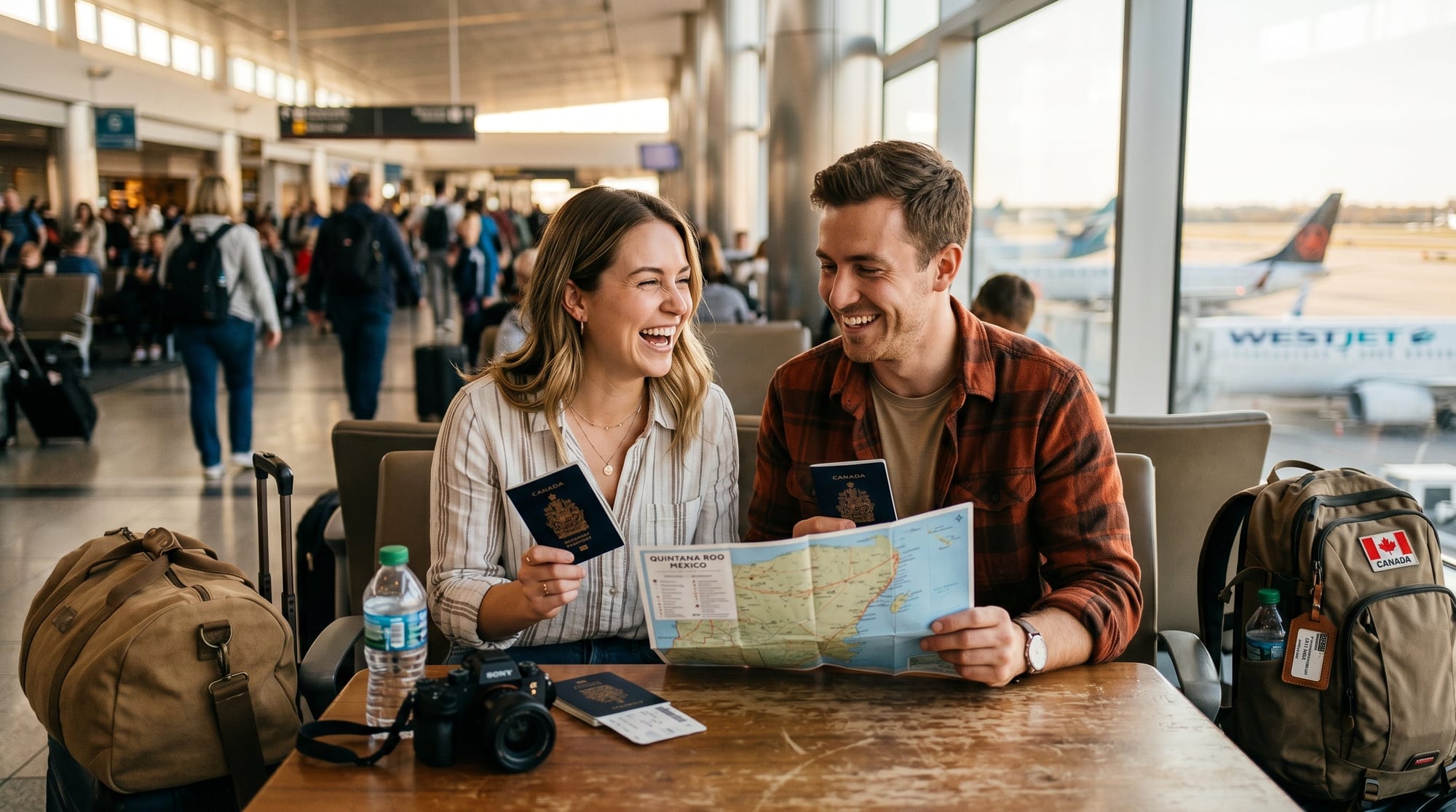
2026 travel
Travel Vaccines for Mexico 2026: What Canadians Need to Know Before Cancun
Planning a sunny escape to Cancun or the Riviera Maya? You're not alone. Over 1.8 million Canadians visit Mexico annually, making it our most popular winter destination. But while you're dreaming of turquoise waters and beachside margaritas, there's an important health conversation we need to have—one that could mean the difference between a dream vacation and a medical emergency.
As Calgary travel health specialists, we've seen the consequences when travelers skip proper preparation. The reality? Preventable travel illnesses affect approximately 20-50% of unvaccinated travelers to certain regions in Mexico. That's not fear-mongering—it's public health data from the Public Health Agency of Canada. And with travel insurance claims for preventable diseases in Mexico increasing 34% between 2024 and 2026, understanding your Cancun travel vaccines options has never been more critical.
This guide provides honest, practical advice on travel vaccines for Mexico, specifically tailored for Calgary residents preparing for their 2026 trips. Whether you're booking an all-inclusive resort stay or planning adventure travel beyond the tourist zones, you'll find everything you need to make informed decisions about your travel health.
✈️ Quick Takeaways: Mexico Travel Vaccines 2026
- No mandatory vaccines: Mexico doesn't require any vaccines for Canadian travelers to enter the country
- Recommended protection: Hepatitis A is recommended for 95% of travelers; Typhoid for 60-70% depending on activities
- Timeline matters: Book your travel health consultation 6-8 weeks before departure (minimum 2-4 weeks for emergency protection)
- Resort travelers aren't exempt: Even all-inclusive guests should consider Hepatitis A vaccination—foodborne illness affects 30-50% of resort visitors who skip vaccines
- Cost and coverage: Many Alberta insurance plans cover 50-100% of travel vaccine costs
Can I Go to Mexico Without Vaccines?
Let's address the elephant in the room: Yes, you can legally travel to Mexico without any vaccines. Mexico has no mandatory vaccination requirements for entry from Canada. You won't be turned away at customs for lacking vaccine documentation.

But here's where travelers often confuse "required for entry" with "recommended for health protection"—and that confusion can have serious consequences.
While no vaccines are legally required, the Public Health Agency of Canada strongly recommends several vaccines based on your destination, planned activities, and length of stay. This isn't bureaucratic box-checking; it's evidence-based medicine responding to real disease risks.
Increase in travel insurance claims for preventable diseases in Mexico between 2024-2026
Consider this data point: travel insurance claims for preventable diseases in Mexico increased 34% between 2024 and 2026. Many of these claims involved travelers who asked themselves "Can I go without vaccines?" answered yes, and then spent their vacation—or weeks after—dealing with preventable illnesses like Hepatitis A or typhoid fever.
The Canadian border won't stop you from traveling unvaccinated. But preventable diseases don't care about legal requirements—they care about biological vulnerability.
Do Canadians Need Vaccines for Mexico? What the Experts Actually Recommend
The nuanced answer from travel health experts in 2026: no mandatory vaccines, but strong recommendations based on your specific travel plans.
According to the Public Health Agency of Canada's 2026 travel health guidelines, here's what Calgary travelers should consider:
Hepatitis A: Recommended for 95% of Travelers
Hepatitis A tops the recommendation list for nearly all Mexico-bound travelers. This liver infection spreads through contaminated food and water—and it's far more common than most Canadians realize.
The data: The Hepatitis A vaccine is 95-100% effective at preventing infection. Protection begins 2-4 weeks after your first dose, making it the single most important vaccine for Mexico travel.
Who needs it? Essentially everyone traveling to Mexico, including resort-only guests. More on why resort travelers aren't exempt below.
Typhoid: Recommended for 60-70% of Travelers
Typhoid fever is a bacterial infection spread through contaminated food and water. Your risk depends significantly on where you'll eat and how adventurous your dining will be.
The data: Typhoid vaccine protects against 50-80% of typhoid cases—not perfect, but significantly better than no protection. You have two options: a single injection that lasts 3 years, or oral capsules that last 5 years.
Who needs it? Travelers planning to eat at local restaurants, street vendors, or smaller establishments outside major resort areas. If your itinerary includes exploring beyond the tourist bubble, this vaccine deserves serious consideration.
Hepatitis B: Recommended for Extended Stays and Adventure Activities
Hepatitis B spreads through blood and bodily fluids—a different transmission route than Hepatitis A, requiring different considerations.
The data: The Hepatitis B vaccine is 95% effective and requires a 3-dose series over 6 months. This timeline means planning well in advance.
Who needs it? Travelers staying longer than 4 weeks, those planning adventure activities with injury risk (diving, zip-lining, ATV tours), healthcare workers, or anyone who might need medical care in Mexico.
💡 Pro Tip: Combination Vaccines Save Time and Money
Ask about the Hepatitis A+B combination vaccine at your travel health consultation. While it requires a 3-dose series (given over 6 months), it protects against both viruses and can reduce your total vaccine costs by 15-20%. Perfect for travelers who plan multiple international trips or extended stays.
What Vaccines Do I Need to Travel to Mexico? The Complete 2026 List
Let's break down the comprehensive vaccine picture for Mexico travel in 2026, distinguishing between routine vaccines and travel-specific recommendations.

Travel-Specific Vaccines
Hepatitis A Vaccine
- Schedule: 2-dose series; second dose given 6-12 months after the first
- Protection timeline: Initial protection begins 2-4 weeks after first dose
- Effectiveness: 95-100% effective after complete series
- Duration: Lifelong immunity for most people after both doses
- Cost: $75-90 per dose at Calgary pharmacies
- Who needs it: All travelers to Mexico, regardless of accommodation type
Typhoid Vaccine
- Schedule: Single injection OR 4 oral capsules taken on alternate days
- Protection timeline: Injection works within 2 weeks; oral capsules require completion 1 week before travel
- Effectiveness: 50-80% protection against typhoid fever
- Duration: Injection lasts 3 years; oral capsules last 5 years
- Cost: $50-65 for injection; $55-70 for oral vaccine
- Who needs it: Travelers eating at local restaurants, street food vendors, or visiting smaller towns
Hepatitis B Vaccine
- Schedule: 3-dose series given at 0, 1, and 6 months
- Protection timeline: Full protection 2 weeks after final dose
- Effectiveness: 95% effective
- Duration: Long-term immunity (possibly lifelong)
- Cost: $60-80 per dose (3 doses total)
- Who needs it: Extended stays (>4 weeks), adventure travelers, healthcare workers, frequent travelers
Rabies Vaccine (Pre-Exposure)
- Schedule: 3-dose series given at 0, 7, and 21-28 days
- Protection timeline: Full protection 2 weeks after final dose
- Effectiveness: Highly effective when completed properly
- Duration: 2-3 years; boosters available if needed
- Cost: $250-300 per dose ($750-900 for complete series)
- Who needs it: Adventure travelers, wildlife enthusiasts, cyclists, runners, cave explorers, veterinarians, or those traveling to remote areas
⚠️ Important Note About Rabies
If you're bitten or scratched by an animal in Mexico, you'll need post-exposure rabies treatment regardless of whether you had the pre-exposure vaccine. However, pre-exposure vaccination significantly simplifies treatment (2 doses instead of 4-5) and buys you crucial time to access medical care. In remote Mexican areas, rabies immune globulin may not be readily available—making pre-exposure vaccination especially valuable for adventure travelers.
Routine Vaccines (Often Overlooked but Important)
International travel is an excellent reminder to ensure your routine vaccines are current:
- MMR (Measles, Mumps, Rubella): Measles outbreaks occur periodically in Mexico. Ensure you've had 2 doses if born after 1970
- Tdap (Tetanus, Diphtheria, Pertussis): Recommended booster every 10 years; especially important if you'll be doing activities with injury risk
- COVID-19: While not required for entry in 2026, staying current with COVID-19 vaccines reduces your risk of travel disruption due to illness
- Influenza: Flu season in Mexico can occur year-round, with peaks during rainy season (May-October)
Timeline: When to Start the Process
Ideal scenario: Book your travel health consultation 6-8 weeks before departure. This timeline allows for multi-dose vaccines and optimal protection development.
Minimum scenario: 2-4 weeks before travel provides time for single-dose vaccines and initial protection from multi-dose series.
Last-minute travel: Even if you're leaving in less than 2 weeks, a travel health consultation is still valuable. Some protection is better than none, and you'll receive crucial advice about food, water, and insect precautions.
Do I Need Any Vaccines to Go to Cancun, Mexico Specifically?
Here's what many Calgary travelers don't realize: Cancun's resort reputation doesn't eliminate health risks.
Approximately 78% of Canadian travelers to Mexico visit Cancun or the Riviera Maya area, and many assume that staying at an all-inclusive resort means zero disease risk. Unfortunately, the data tells a different story.
Percentage of resort travelers affected by foodborne illness when they skip recommended vaccines
Why Resort Travelers Still Need Hepatitis A Vaccine
Foodborne illness affects 30-50% of travelers to resort destinations who skip recommended vaccines. Hepatitis A can be contracted from:
- ✅ Ice in drinks (ice isn't always made from purified water)
- ✅ Fresh salads and raw vegetables at buffets
- ✅ Fruit garnishes and smoothies
- ✅ Poolside food prepared by infected food handlers
- ✅ Any excursion that includes meals outside the resort
The Hepatitis A vaccine should be given at least 2 weeks before travel to Cancun for initial protection. Even for a week-long, all-inclusive stay, this vaccine is the travel health cornerstone recommended by the Public Health Agency of Canada.
Resort-Only vs. Adventure Travel: Different Risk Profiles
Resort-only travelers (staying at all-inclusive properties, minimal outside excursions):
- ✅ Strongly recommended: Hepatitis A vaccine
- ✅ Consider: Routine vaccines (MMR, Tdap, COVID-19, flu)
- ⚠️ Usually not necessary: Typhoid, Hepatitis B, rabies (unless staying >4 weeks)
Adventure travelers (excursions, local dining, eco-tours, water sports, exploration beyond resort):
- ✅ Strongly recommended: Hepatitis A, Typhoid
- ✅ Consider: Hepatitis B (if staying >4 weeks), rabies (for wildlife/cave activities), Dukoral (for travelers' diarrhea prevention)
- ✅ Essential: All routine vaccines current
"The most common misconception we hear from Calgary travelers is that an all-inclusive resort eliminates health risks. While quality resorts maintain good food safety standards, Hepatitis A transmission can still occur—and once you're infected, your trip and recovery can be derailed for weeks or months. A simple vaccine prevents this completely."
Cancun-Specific Considerations in 2026
The Cancun and Riviera Maya region has seen increased development and tourism infrastructure in recent years, but this doesn't eliminate infectious disease risks:
- Water quality: While resort water systems are generally well-maintained, municipal water quality varies. Stick to bottled or purified water for drinking, even at resorts.
- Excursions: Popular day trips to cenotes, Mayan ruins, Cozumel, Isla Mujeres, or Tulum increase exposure to local food and water sources
- Local dining: Exploring Playa del Carmen's 5th Avenue or downtown Cancun restaurants means stepping outside the controlled resort environment
- Hurricane season: June-November hurricane season can temporarily disrupt water purification systems and increase disease transmission risks
Do I Need Dukoral to Go to Mexico?
Travelers' diarrhea—the infamous "Montezuma's revenge"—affects up to 50% of international travelers to Mexico. While usually not dangerous, it can certainly ruin several days of your vacation. This brings up an important question: should you get Dukoral?
What Is Dukoral?
Dukoral is an oral vaccine that provides protection against cholera and enterotoxigenic E. coli (ETEC), the most common bacterial cause of travelers' diarrhea.
The effectiveness data:
- Provides approximately 60% protection against ETEC (the main cause of travelers' diarrhea)
- Provides approximately 85% protection against cholera (though cholera is rare in tourist areas of Mexico)
- Protection lasts about 3 months for travelers' diarrhea; 2 years for cholera
Cost and Administration
- Cost: $110-140 for the complete 2-dose series at Calgary pharmacies
- Schedule: Two doses taken 1-6 weeks apart
- Timeline requirement: Must be completed at least 1 week before travel
- Administration: Mixed with buffer solution and drunk; avoid food and drink for 1 hour before and after
Who Should Consider Dukoral?
Dukoral isn't recommended for everyone, but it makes sense for certain travelers:
- ✅ Travelers with compromised immune systems (immunosuppressive medications, chronic conditions)
- ✅ Those with previous severe travel gastrointestinal issues who want extra protection
- ✅ Adventure travelers planning extensive street food exploration or eating at small local establishments
- ✅ Longer trips (more than 2 weeks) where the cumulative exposure risk increases
- ✅ Travelers who cannot afford to be ill (destination weddings where you're in the wedding party, important business travel, once-in-a-lifetime trips)
- ✅ People with anxiety about travelers' diarrhea whose worry would impact their enjoyment
💡 The Honest Truth About Dukoral
As travel health specialists, we want Calgary travelers to have realistic expectations: Dukoral provides 60% protection against ETEC-caused diarrhea, not 100%. It doesn't protect against viral causes of travelers' diarrhea or other bacterial strains. Think of it as one layer of protection that works best when combined with good food and water hygiene practices. For resort-only travelers with no underlying health conditions, the cost-benefit calculation may not favor Dukoral. For adventure travelers eating extensively at local establishments, it's often worth the investment.
Alternatives and Complementary Strategies
Whether or not you choose Dukoral, these strategies reduce your travelers' diarrhea risk:
- Water precautions: Drink only bottled or purified water; avoid ice unless you're certain it's made from purified water
- Food safety: "Boil it, cook it, peel it, or forget it"—avoid raw vegetables, unpeeled fruits, and undercooked foods
- Hand hygiene: Wash hands frequently with soap and water, especially before eating
- Probiotic supplements: Some evidence suggests certain probiotics reduce travelers' diarrhea risk
- Prescription standby treatment: Ask your travel health pharmacist about carrying antibiotics for self-treatment if severe diarrhea develops
Timeline: When to Get Your Mexico Travel Vaccines in Calgary
Timing matters significantly for travel vaccine protection. Here's your practical scheduling guide for Cancun travel vaccines and Mexico preparation in 2026.
The Ideal Timeline: 6-8 Weeks Before Departure
This window allows for:
- Complete multi-dose vaccine series if needed
- Full immunity development before travel
- Time to address any side effects (rare, but they occasionally occur)
- Flexibility to schedule follow-up doses
- Relaxed planning without last-minute stress
What happens at this timeline:
- ✅ Book your travel health consultation at Imagine Health Pharmacy (appointments typically take 30-45 minutes)
- ✅ Receive personalized risk assessment based on your specific itinerary
- ✅ Get first doses of recommended vaccines
- ✅ Schedule any follow-up doses needed
- ✅ Receive printed travel health summary with destination-specific advice
The Minimum Timeline: 2-4 Weeks Before Departure
Life happens, and sometimes trips are booked last-minute. While not ideal, 2-4 weeks still provides meaningful protection:
- Hepatitis A: Provides some protection 2-4 weeks after first dose (you'd get the second dose after your trip for long-term immunity)
- Typhoid injection: Works within 2 weeks
- Dukoral: Can be completed in minimum 1 week (doses taken 1 week apart) plus 1 week for protection to develop
- Routine vaccines: Most provide protection within 2 weeks
What's NOT possible at this timeline:
- ⚠️ Complete Hepatitis B series (requires 6 months)
- ⚠️ Complete rabies pre-exposure series (requires 3-4 weeks)
- ⚠️ Optimal Dukoral timing (ideally started 2-6 weeks before travel)
Typical duration of a comprehensive travel health consultation at Imagine Health, including personalized risk assessment and vaccine administration
Emergency Timeline: Less Than 2 Weeks Before Departure
Even with imminent departure, don't skip the travel health consultation. You still have options:
- Hepatitis A: Still worth getting—provides some protection and you'll need it for future travel anyway
- Typhoid injection: Can still provide partial protection
- Enhanced hygiene counseling: Critical when vaccines can't provide full protection
- Prescription medications: Standby antibiotics for travelers' diarrhea, altitude sickness prevention if traveling to Mexico City or mountainous regions
- Malaria prevention: If traveling to certain southern Mexican states, antimalarial medications can be started close to departure
Combination Strategies to Reduce Appointments
Nobody wants multiple pharmacy visits. Here's how to minimize appointments:
- Combination vaccines: Hepatitis A+B combination vaccine covers both in one series
- Multiple vaccines at once: You can safely receive multiple vaccines during the same appointment (different injection sites)
- Routine vaccine catch-up: Use your travel health visit to update Tdap, MMR, or other routine vaccines due for boosters
Booking Your Appointment in Sundance
At Imagine Health Pharmacy & Travel Clinic in SW Calgary:
- Appointments available within 3-5 business days for routine travel health consultations
- Same-week appointments often available for urgent travel
- All major travel vaccines kept in stock
- Certified travel health pharmacists with 15+ years combined experience
- Convenient evening and weekend hours available
Cost and Coverage: Travel Vaccines at Imagine Health Pharmacy in Calgary
Let's talk about the financial reality of travel vaccines. Transparency matters, and Calgary travelers deserve clear information about costs and insurance coverage.
Typical Consultation Fees
Travel health consultations at Calgary pharmacies typically range from $40-75, depending on complexity and time required. This consultation includes:
- Personalized risk assessment based on your destination, activities, and health history
- Vaccine recommendations aligned with Public Health Agency of Canada guidelines
- Food, water, and insect safety counseling
- Printed travel health summary to take with you
- Prescription medications if needed (standby antibiotics, antimalarials, etc.)
Individual Vaccine Costs (2026 Pricing)
Here are realistic Calgary pharmacy pricing ranges for common Mexico travel vaccines:
| Vaccine | Cost Per Dose | Doses Required | Total Cost |
|---|---|---|---|
| Hepatitis A | $75-90 | 2 (second dose at 6-12 months) | $150-180 |
| Typhoid (injection) | $50-65 | 1 | $50-65 |
| Typhoid (oral) | $55-70 | 1 (4 capsules total) | $55-70 |
| Hepatitis B | $60-80 | 3 (at 0, 1, and 6 months) | $180-240 |
| Hepatitis A+B (combination) | $90-110 | 3 (at 0, 1, and 6 months) | $270-330 |
| Dukoral | $110-140 | 1 (2-dose series) | $110-140 |
| Rabies (pre-exposure) | Travel Vaccines Calgary: Your Complete 2026 Guide to Travel Immunizations at Imagine Health Pharmacy
|