Honest about the risks, and specific about what prevents each one.
The thing you booked
The Government of Canada says outdoor activities such as white-water rafting, scuba diving, bungee jumping, canopy touring and other adventure sports can be dangerous if you are unprepared. Trails are rarely marked, weather can change rapidly even in summer, and safety features on small boats used in river and lake excursions are not always reliable. It also notes life-threatening fauna such as jaguars, pumas, wild pigs and poisonous snakes are common in densely wooded areas, and its own checklist includes knowing the symptoms of high-altitude illness, which can be fatal.
Prevention Never go alone and stay with your group. Do not venture off marked trails. Refuse equipment you have doubts about — the Government of Canada says so in as many words. Tell someone your itinerary, carry enough water, and buy insurance that names helicopter rescue and medical evacuation.
The sea
The Government of Canada is blunt about it: coastal waters can be dangerous, riptides are common, and several drownings occur each year. Very few beaches are supervised by lifeguards and there are no warning signs of dangerous conditions — so an empty, beautiful beach tells you nothing about whether it is safe. CDC adds the plain rules: swim only in designated swimming areas, do not dive into shallow water, and wear shoes on beaches where there may be animal waste.
Prevention Ask residents and tour operators which beaches are safe to swim, not which are prettiest. Never swim alone, after hours, or outside marked areas. Learn what a rip current looks like before you go in, and do not camp or sleep overnight on beaches.
Roads
The Government of Canada states that road conditions and road safety are generally poor throughout the country and that Costa Rica has one of the highest traffic accident rates in the world — potholes, sharp curves, missing traffic signs, landslides, narrow or unpaved roads, and motorists who often drive without lights at night. There is a consequence people do not expect: if you are involved in a road accident, the Costa Rican government may prevent you from leaving the country until all injury claims are settled, regardless of fault or insurance, and the legal process may take several months. CDC advises avoiding motorcycles and motorbike taxis, avoiding driving at night because street lighting in parts of the country may be poor, and travelling in daylight only, especially in rural areas.
Prevention No night driving, and no motorbike taxis. Daylight hours in rural areas. A bigger vehicle over a smaller one, and confirm the rental agency provides emergency assistance and car insurance.
Mosquitoes that bite in the daytime
Dengue, Zika and chikungunya are all named for Costa Rica by both sources, and none has a vaccine or preventive medication that changes the plan for an ordinary holiday. The Government of Canada notes dengue mosquitoes typically bite during the daytime, particularly around sunrise and sunset, that dengue can become severe and sometimes fatal, and that chikungunya mosquitoes bite both day and night. Zika is spread by mosquito bite and also sexually, and can cause serious birth defects. CDC also lists leishmaniasis, spread by sand fly bite, which the Government of Canada rates as low risk for most travellers.
Prevention Repellent through the whole day, not just at dusk: DEET 20% or more, or picaridin, oil of lemon eucalyptus, IR3535 or 2-undecanone. Long sleeves and loose, tightly woven clothing. Air-conditioned or screened rooms, and a net if the room is not properly sealed. If you are pregnant or planning to be, raise Zika before you book rather than after.
Bats, monkeys and the animals people want to photograph
CDC says to be extra careful around dogs, bats, monkeys, sea animals such as jellyfish, and snakes, and not to touch or feed any animal you do not know. The Government of Canada advises avoiding contact with stray dogs, livestock, monkeys, snakes, rodents, birds and bats, staying away from places where animal waste builds up such as caves, and watching children closely because they are more likely to try to touch animals. Rabies is the reason, and here it lives mainly in bats.
Prevention No feeding, no photographs that need you to get closer. If you are bitten or scratched, including by a bat, wash the wound with soap and clean water for about fifteen minutes and get medical care as soon as possible — do not wait to see how it looks. If you wake in a room with a bat, CDC says seek care immediately.
Earthquakes, volcanoes and the rain
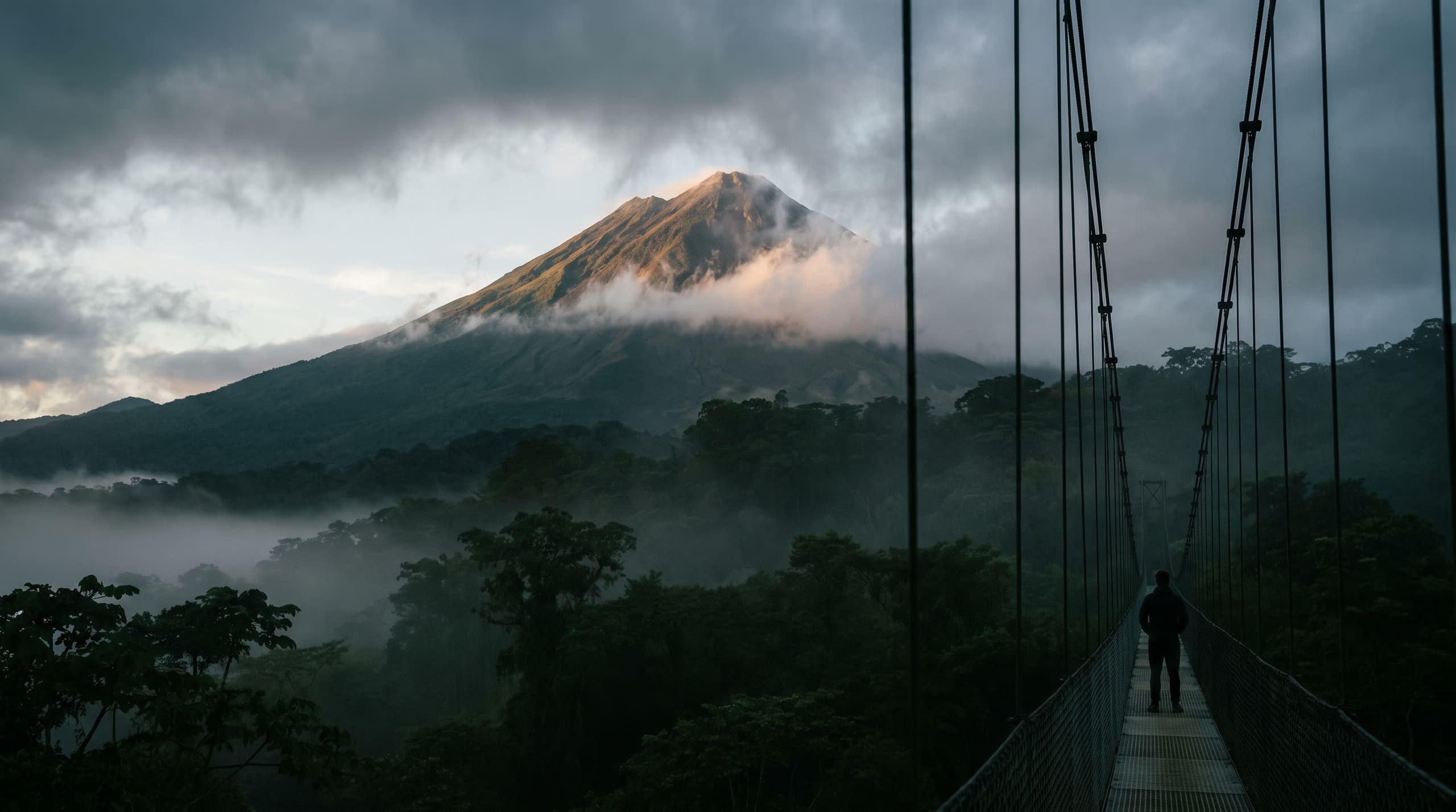
The Government of Canada notes Costa Rica sits in an active seismic zone where earthquakes and tremors occur regularly and tsunamis are possible, and that there are several active or potentially active volcanoes including Arenal, Poás, Rincón de la Vieja and Turrialba, where eruptions may occur at any time and sometimes lead to evacuations at short notice. Hurricane season runs mid-May to the end of November on the Pacific and early June to the end of November on the Caribbean side, and even small tropical storms can quickly develop into major hurricanes. Heavy rain causes flooding, flash floods and landslides, and roads may become impassable.
Prevention If you are staying on the coast, find out the tsunami evacuation route on the first day rather than the worst day. Pay attention to warnings issued for national parks, and treat a park closure as information rather than an inconvenience. Build slack into an itinerary booked in the rainy season.
Paying for it, and getting out
The Government of Canada rates health care as very good — public hospitals offer very good services throughout the country, though waiting times may be long and doctors rarely speak English or French; private clinics and hospitals are excellent but mainly in San José, expensive, and typically require upfront payment. Emergency services may be limited in rural areas, and medical evacuation can be very expensive and may be necessary.
Prevention Travel insurance that explicitly covers medical evacuation, hospital stays and the adventure activities you have booked. Save the policy number and the insurer’s emergency number offline. Carry a paper and an electronic copy of your prescriptions, and a Spanish list of your medications — most doctors will not be working in English.
Food, and fresh water you swim in
The Government of Canada’s rule is the old one and it still works: boil it, cook it, peel it, or leave it. It also says to avoid getting water in your eyes, mouth or nose when swimming in fresh water such as streams, lakes or canals, especially after heavy rain or flooding, because water that looks clean can still be contaminated. CDC names leptospirosis, spread by contact with urine-contaminated water and mud, and melioidosis, from contaminated fresh water, mud or soil especially after heavy rains, and says to avoid floodwater and to bandage open wounds, cuts or burns.
Prevention Food cooked fresh and served hot. Peel fruit yourself. Do not swallow water when swimming, and stay out of flood water and mud after heavy rain — particularly with a cut on you. Rehydration salts weigh nothing, and we can send you with a standby antibiotic where it is appropriate.