Honest about the risks, and specific about what prevents each one.
Altitude
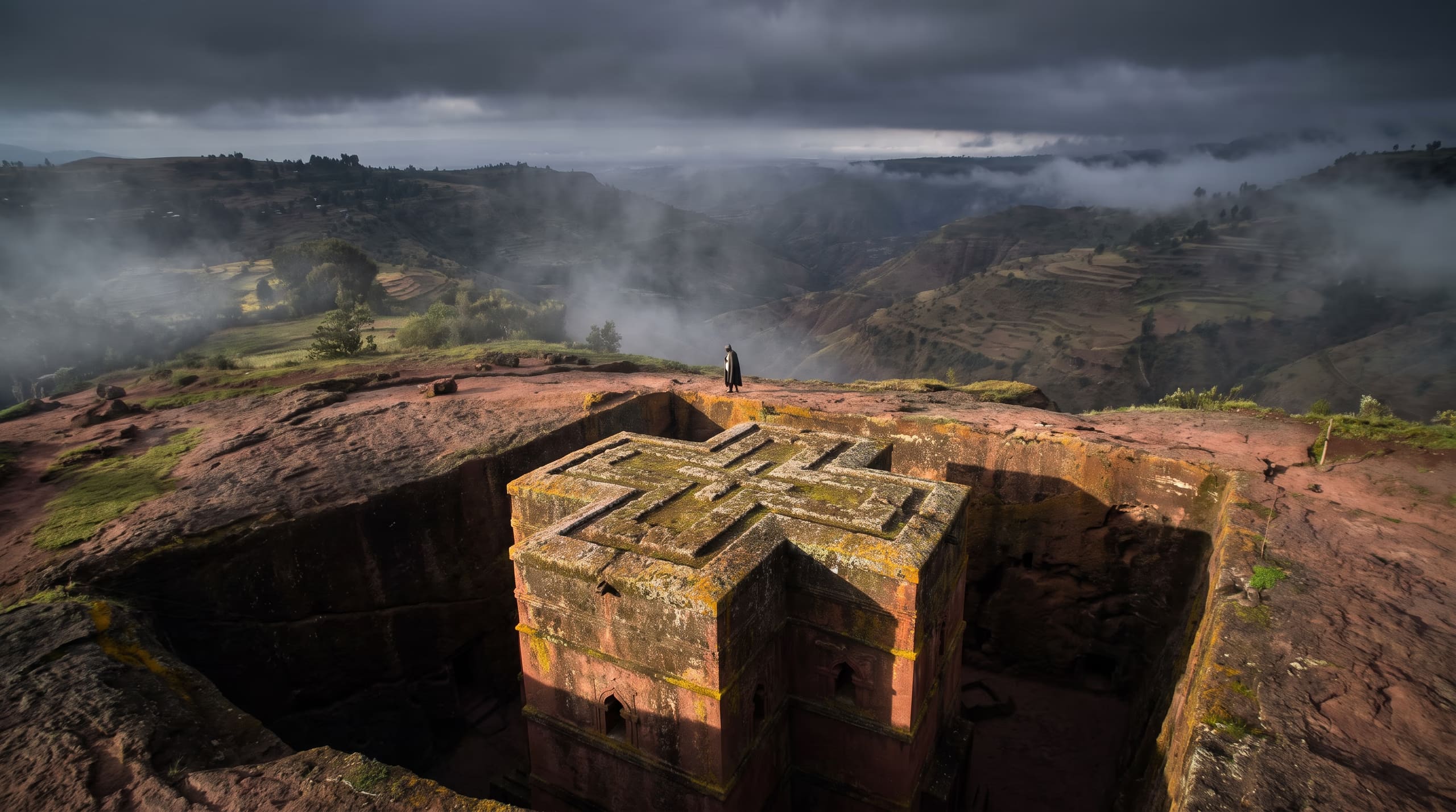
The Government of Canada notes Addis Ababa sits at about 2,500 metres above sea level and that high-altitude illnesses may occur at high altitudes. Most Ethiopian itineraries start in Addis and go up from there — Lalibela, the Bale Mountains, the Simiens. Neither source publishes a detailed altitude protocol, so we will not invent one; what we can do is look at how fast your route gains height.
Prevention Tell us the itinerary with heights or place names attached, and tell us if you are trekking within a day or two of landing. Build time into the ascent rather than assuming fitness covers it. If you feel unwell as you climb, the safe response is to stop going higher until it settles, and to tell your guide rather than push through.
Malaria
CDC puts transmission in all areas below 2,500 metres, and names Addis Ababa among them — there is no risk above 2,500 metres. Chloroquine resistance is documented. The parasite mix here is unusual: roughly 70% P. falciparum and 30% P. vivax, with P. malariae and P. ovale rare, which is a much larger vivax share than most of the region. The Government of Canada is looser, saying risk is in certain areas or at certain times of year and that antimalarial medication may be recommended depending on itinerary and season.
Prevention Prescription tablets where your route drops below 2,500 metres, chosen against your dates and your other medicines. Plus repellent, long sleeves at dusk and a treated net.
Roads
The Government of Canada describes driving standards, vehicle maintenance and road conditions as often poor throughout the country, with accidents frequent — especially in Addis Ababa and on the Addis Ababa–Djibouti road. Drivers often disregard traffic laws, speeding is common, and drivers often do not stop at traffic lights, which it says makes intersections very prone to accidents.
Prevention A driver from your operator rather than self-driving. No intercity roads after dark. Seatbelts, including in the back — and treat every green light as a suggestion.
Food and water, including cholera
CDC calls active cholera transmission widespread in Ethiopia; the Government of Canada says most travellers are at very low risk. Either way the transmission route is the same as typhoid’s and hepatitis A’s, and the precautions cover all three at once.
Prevention Bottled or boiled water, including for brushing teeth. Hot food served hot, fruit you peel yourself, no unpasteurised dairy. Rehydration salts in the bag — and take dehydration seriously at altitude.
Rabies with no vaccine nearby
CDC says dogs infected with rabies are commonly found in Ethiopia and, critically, that if an exposure occurs there the rabies vaccines are typically not readily available. The Government of Canada calls rabies common here. The gap between where a bite happens and where treatment exists is the whole problem, and it widens the further you get from Addis.
Prevention Do not touch or feed animals you do not know. Any bite, scratch or lick on broken skin: wash for fifteen minutes with soap and running water and seek medical advice the same day. Pre-exposure vaccine is worth discussing for longer, rural or repeat trips.
Ticks and mosquitoes beyond malaria
CDC names dengue, Zika and chikungunya among the mosquito-borne illnesses for Ethiopia, and African tick-bite fever and Crimean-Congo haemorrhagic fever among the tick-borne ones, plus leptospirosis and hantavirus. The Government of Canada names dengue as a risk with no vaccine or preventive medication available in Canada, and chikungunya as a risk with a vaccine approved in Canada.
Prevention Repellent through the day, not only at dusk. Long trousers and closed shoes in grass and scrub, and a tick check at the end of a walking day. Permethrin-treated clothing if you are camping or trekking.
Fresh water
The Government of Canada notes a risk of schistosomiasis in Ethiopia while saying most travellers are at low risk, and asks travellers to avoid contact with untreated fresh water — there is no vaccine and no preventive medication. CDC describes transmission through wading, swimming, bathing or washing in contaminated fresh water, including untreated pools.
Prevention Stay out of the Rift Valley lakes and the rivers, however hot the day. Chlorinated pools are fine.
Getting treated, and getting out
The Government of Canada says medical facilities and services are not up to Canadian standards, that most lack personnel, equipment, supplies and medications, that services outside Addis Ababa are extremely limited, and that a medical emergency may require air evacuation abroad. It also notes fuel shortages that may affect ground and air transport, electricity and telecommunications.
Prevention Travel insurance that names medical evacuation and hospital stays. Policy number saved offline. Enough of your own prescription medicine for the whole trip, since the same source says some medications may not be available there.