
Calgary travel clinic
Vietnam Travel Vaccines 2026: What You Really Need (From a Calgary Travel Clinic)
Planning a trip to Vietnam in 2026? You're not alone. Vietnam remains one of Southeast Asia's most popular destinations for Canadian travellers, drawing visitors to its bustling cities, stunning coastlines, and rich cultural heritage. But before you book your flights or pack your bags, understanding the CDC travelers' health Vietnam vaccines hepatitis A typhoid recommendations can mean the difference between a memorable adventure and a medical emergency abroad.
At Imagine Health Pharmacy & Travel Clinic in Sundance, SE Calgary, we consult with dozens of Vietnam-bound travellers every month. The most common question we hear? "Which vaccines do I actually need?" Let's cut through the confusion with evidence-based guidance from the CDC, WHO, and Health Canada's travel health experts.
✈️ Quick Takeaways: Vietnam Vaccines 2026
- No mandatory vaccines required for Vietnam entry, but 5-7 vaccines are recommended depending on your itinerary
- Hepatitis A is recommended for 100% of travelers to Vietnam by the CDC, regardless of where you're staying
- Typhoid vaccine is recommended for 85-90% of travelers, especially those visiting rural areas or eating street food
- Both vaccines can be given together during a single appointment at our Calgary clinic
- Start planning 6-8 weeks before departure for optimal protection (minimum 2 weeks)
- Malaria medication is only needed for specific rural regions, not major cities
Vietnam Travel Vaccines in 2026: What's Actually Required vs. Recommended
Here's the good news: Vietnam has no mandatory vaccine requirements for entry in 2026. Unlike some countries that require proof of yellow fever vaccination, you won't be turned away at immigration for lacking specific immunizations.

However, "not required" doesn't mean "not necessary." The CDC, World Health Organization, and the Public Health Agency of Canada all publish Vietnam-specific health recommendations that travelers should take seriously. According to 2026 guidelines, between 5-7 vaccines are recommended depending on your specific travel plans:
Recommended for All Travelers to Vietnam:
- Hepatitis A – Recommended for 100% of travelers
- Typhoid – Recommended for most travelers (85-90%)
- Routine vaccinations – MMR, DPT, polio, and annual flu shot should be up-to-date
Recommended for Some Travelers (Based on Itinerary):
- Hepatitis B – For travelers who might have exposure to blood/body fluids, need medical care, or plan extended stays
- Japanese Encephalitis – For travelers spending >1 month in rural areas, or shorter trips involving extensive outdoor activities in rice-growing or pig-farming regions
- Rabies – For adventure travelers, cyclists, or those working with animals
- COVID-19 – Staying current with booster recommendations for international travel
💡 Pro Tip from Our Travel Health Specialists
Vietnam's vaccine recommendations haven't changed dramatically in recent years, but the way we assess risk has. In 2026, we use your specific itinerary, accommodation type, and planned activities to create a personalized vaccine schedule. A backpacker staying in rural homestays has different needs than someone on a guided city tour. Book your consultation 6-8 weeks before departure so we have time to tailor your protection plan.
Do I Need Hep A and Typhoid for Vietnam?
This is the #1 question we hear at our SE Calgary travel clinic, and the answer is straightforward: Yes, hepatitis A and typhoid vaccines are strongly recommended for virtually all travelers to Vietnam.
Hepatitis A: Recommended for 100% of Travelers
According to the CDC's 2026 guidelines, hepatitis A vaccination is recommended for all travelers to Vietnam, regardless of where you're staying or what you're eating. Why such a strong recommendation?
Hepatitis A is transmitted through contaminated food and water. Even if you're staying in luxury hotels and eating at upscale restaurants, you can still be exposed through ice cubes, fresh produce, or food handlers. Vietnam is classified as having high hepatitis A endemicity, meaning the virus circulates widely in the environment.
Timeline for hepatitis A protection:
- Single dose provides protection within 2-4 weeks
- Should be administered at least 2 weeks before departure
- One dose provides protection for 12 months; second dose (given 6-12 months later) extends protection to 20+ years
- Even if you're leaving soon, getting vaccinated 1 week before travel still provides some protection
Typhoid: Recommended for 85-90% of Travelers
The CDC recommends typhoid vaccination for most travelers to Vietnam, particularly those who will be:
- ✅ Visiting smaller cities, villages, or rural areas
- ✅ Eating street food or dining at smaller local establishments
- ✅ Staying with friends or relatives
- ✅ Traveling off the typical tourist routes
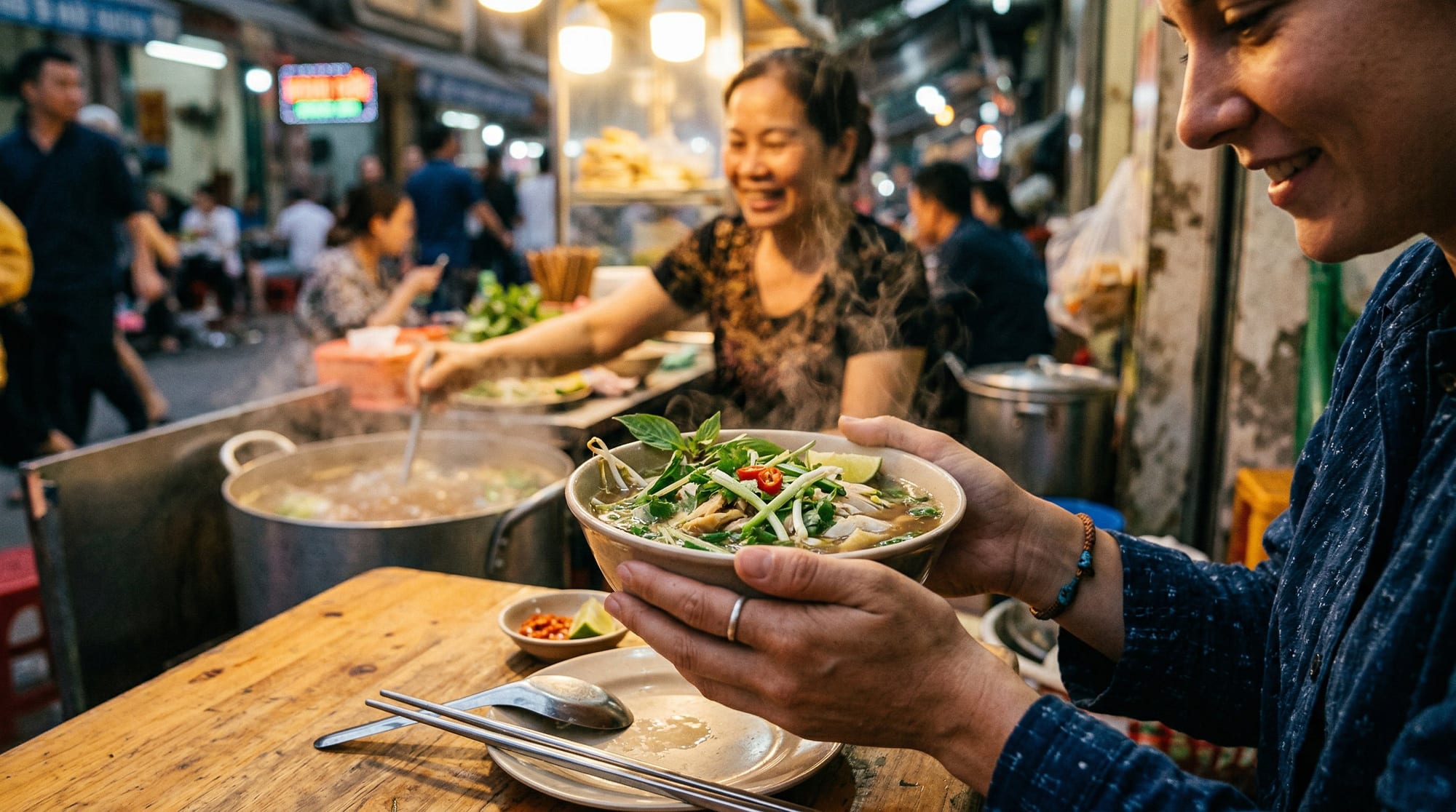
Even adventurous eaters in major cities like Hanoi, Ho Chi Minh City, or Da Nang should consider typhoid protection. The street food scene is one of Vietnam's biggest draws, but it's also a common source of typhoid transmission.
Timeline for typhoid protection:
- Injectable vaccine (Typhim Vi or Typherix): Single dose provides protection within 1-2 weeks; lasts 2-3 years
- Oral vaccine (Vivotif): Four capsules taken on alternate days; complete series 1 week before travel; lasts 5 years
- We typically recommend the injectable version for travelers with less than 2 weeks before departure
Effectiveness rate of hepatitis A vaccine after a single dose—one of the most protective travel vaccines available
Can You Get Hepatitis A and Typhoid Vaccine Together?
Yes, absolutely. This is excellent news for time-crunched travelers: hepatitis A and typhoid vaccines can be administered during the same appointment. You have two options:

Option 1: Separate Injections (Two Needles)
We can administer hepatitis A in one arm and typhoid in the other during a single visit. There are no safety concerns or reduced effectiveness with this approach.
Typical costs in Calgary (2026):
- Hepatitis A vaccine (Havrix or Vaqta): $70-95 per dose
- Typhoid vaccine (injectable): $50-75 per dose
- Total: $120-170
Option 2: Combination Vaccine (One Needle)
The combination vaccine (branded as Hepatyrix or ViVaxim in Canada) contains both hepatitis A and typhoid protection in a single injection. Many travelers prefer this option for convenience.
Typical cost in Calgary (2026):
- Combination vaccine: $130-180 per dose
At Imagine Health Pharmacy in Sundance, we stock both options and can help you choose based on your preference, timeline, and budget. Some travelers find the slight cost savings of separate vaccines worthwhile, while others prioritize the convenience of a single injection.
⚠️ Insurance Coverage Note
Most Alberta health insurance plans don't cover travel vaccines, as they're considered elective. However, some private insurance plans and employee health benefits do provide partial or full coverage. Check with your insurance provider before your appointment. We provide detailed receipts that you can submit for reimbursement.
How Likely Is It to Get Hepatitis A in Vietnam? (2026 Risk Data)
Understanding actual risk helps put vaccine recommendations in perspective. So what are the real numbers?

Vietnam is classified by the WHO as a high-endemicity region for hepatitis A. According to epidemiological data compiled by the CDC and published in 2026 travel health guidelines:
- Incidence rate: 15-25 cases per 100,000 travelers annually in unvaccinated populations
-
Risk increases 3-5x for travelers who:
- Visit rural areas or smaller cities
- Eat street food regularly
- Stay longer than 2 weeks
- Have close contact with local populations
- Post-vaccination protection: >95% effective after a single dose
To put this in perspective: if 10,000 unvaccinated Canadian travelers visit Vietnam this year, we'd expect approximately 150-250 to contract hepatitis A. With vaccination, that number drops to fewer than 10-15 cases.
What Does Hepatitis A Actually Do?
Many travelers underestimate hepatitis A because they've never encountered it. Unlike a brief bout of traveler's diarrhea, hepatitis A causes:
- Severe fatigue lasting weeks to months
- Jaundice (yellowing of skin and eyes)
- Abdominal pain and nausea
- Loss of appetite and significant weight loss
- Recovery typically takes several weeks to several months
- In rare cases (more common in older adults), can cause liver failure
"I've seen travelers who skipped the hepatitis A vaccine spend their entire Vietnam trip—and months after returning home—dealing with debilitating illness. The vaccine is one of the best investments you can make in your travel health."
The hepatitis A vaccine has one of the highest effectiveness rates of any travel vaccine. For a single dose costing $70-95, you're buying exceptional protection against a disease that could derail months of your life.
What Are the Odds of Getting Typhoid in Vietnam?
Typhoid fever is another vaccine-preventable disease with significant presence in Vietnam. The 2026 CDC data shows:
- Incidence rate: Approximately 10-15 cases per 100,000 unvaccinated travelers per month of stay
-
Highest risk areas:
- Mekong Delta region
- Rural provinces, particularly in central Vietnam
- Areas with questionable water sanitation
- Smaller cities and towns off major tourist routes
- Risk comparison: Unvaccinated travelers face 10-20x higher risk than vaccinated travelers
Vaccine Effectiveness
Typhoid vaccines aren't as highly protective as hepatitis A vaccines, but they still provide substantial risk reduction:
- Oral vaccine (Vivotif): 70-80% protection over 5 years
- Injectable vaccine (Typhim Vi/Typherix): 50-80% protection over 2-3 years
Even with vaccination, practicing food and water safety remains important. Think of the typhoid vaccine as your backup protection when you eat that amazing pho from a street vendor or accidentally consume tap water.
Understanding Typhoid Fever
Typhoid is caused by Salmonella typhi bacteria transmitted through contaminated food and water. Unlike common food poisoning that resolves in a few days, typhoid fever causes:
- Sustained fever climbing to 39-40°C (102-104°F)
- Weakness and abdominal pain
- Headache and confusion in severe cases
- Requires antibiotic treatment; complications can be life-threatening without proper care
- Illness typically lasts 3-4 weeks without treatment
Medical treatment in Vietnam varies significantly by location. Major cities have excellent hospitals with English-speaking staff, but rural areas may have limited facilities. Getting sick with typhoid while trekking in remote regions presents serious logistical challenges.
Risk reduction provided by typhoid vaccine—significant protection for a disease that can ruin your trip and require hospitalization
Do I Need Malaria Tablets for Vietnam? (2026 CDC Malaria Map Zones)
Malaria is a common concern for Vietnam travelers, but the answer is more nuanced than a simple yes or no. Malaria risk in Vietnam is geographically specific—most popular tourist destinations have no malaria risk at all.
Where Malaria Risk EXISTS in Vietnam (2026)
According to the CDC's 2026 malaria map and the WHO's updated risk zones, malaria transmission occurs in:
- ✅ Rural areas of provinces bordering Cambodia and Laos
- ✅ Central Highlands (provinces like Kon Tum, Gia Lai, Dak Lak, Dak Nong)
- ✅ Remote rural areas of south-central and southern Vietnam
- ✅ Areas with elevations below 1,500 meters in affected regions
Where Malaria Risk DOES NOT EXIST
- ❌ Hanoi and the Red River Delta
- ❌ Ho Chi Minh City (Saigon) and surrounding urban areas
- ❌ Coastal resort areas: Da Nang, Nha Trang, Mui Ne, Phu Quoc Island
- ❌ Ha Long Bay
- ❌ Hoi An
- ❌ Sa Pa (elevation above 1,500m)
The bottom line: If your Vietnam itinerary includes only major cities and coastal resort areas (which describes 85-90% of tourists), you do not need malaria prophylaxis. However, if you're visiting rural areas in risk zones or the Central Highlands, medication is recommended.
Malaria Medication Options (2026 Pricing)
If your itinerary requires malaria protection, we offer several options at Imagine Health Pharmacy:
| Medication | Cost (2026) | Dosing Schedule | Notes |
|---|---|---|---|
| Malarone (atovaquone/proguanil) | $6-8/day | Start 1-2 days before travel; continue 7 days after | Best tolerability; shorter post-travel course |
| Doxycycline | $1-2/day | Start 1-2 days before travel; continue 28 days after | Most economical; also prevents some bacterial infections |
| Mefloquine (Lariam) | $3-5/week | Start 2-3 weeks before travel; continue 4 weeks after | Weekly dosing; not recommended due to neuropsychiatric side effects |
At our Sundance clinic, we most commonly prescribe Malarone for Vietnam travelers due to its excellent safety profile and convenient dosing schedule. For longer trips or budget-conscious travelers, doxycycline is a cost-effective alternative.
🦟 Malaria Prevention Beyond Medication
Remember that antimalarial medication is only one part of protection. Even in low-risk areas, mosquito-borne diseases like dengue fever are present. We recommend all Vietnam travelers:
- Use insect repellent containing 20-30% DEET
- Wear long sleeves and pants during dawn and dusk (peak mosquito activity)
- Sleep under mosquito nets if accommodation isn't screened
- Consider treating clothing with permethrin spray
Complete Vietnam Vaccine Timeline & Costs at Imagine Health (2026 Pricing)
Timing is everything with travel vaccines. Here's your complete planning guide:
Ideal Timeline: 6-8 Weeks Before Departure
Starting your travel health preparation 6-8 weeks before your trip gives us maximum flexibility to tailor your vaccine schedule, especially if you need multiple-dose vaccines like Japanese encephalitis or hepatitis B.
What happens at this timeline:
- Week 6-8: Initial consultation and first round of vaccines (hepatitis A, typhoid, routine boosters if needed)
- Week 4: Second dose of Japanese encephalitis if required (given 28 days after first dose)
- Week 2: Final review, malaria medication prescription, travel health supplies
- Week 0: Depart with full protection
Minimum Timeline: 2 Weeks Before Departure
Even if you're leaving soon, it's not too late. Most Vietnam vaccines provide protection within 1-2 weeks:
- Hepatitis A: 2-4 weeks for full protection (some protection within 1 week)
- Typhoid (injectable): 1-2 weeks
- Typhoid (oral): Complete 4-capsule series by 1 week before travel
- Routine boosters: Immediate protection if previously vaccinated
We can't complete multi-dose series like Japanese encephalitis on short notice, but we'll maximize your protection with available options.
2026 Pricing at Imagine Health Pharmacy & Travel Clinic
Travel Health Consultation Fee: $45-65 (30-45 minute appointment with certified travel health professional)
Individual Vaccine Costs:
- Hepatitis A (Havrix, Vaqta): $70-95
- Typhoid injectable (Typhim Vi, Typherix): $50-75
- Hepatitis A + Typhoid combination (Hepatyrix, ViVaxim): $130-180
- Japanese Encephalitis (Ixiaro): $300-350 (2-dose series)
- Hepatitis B (Engerix-B, Recombivax HB): $55-75 per dose (3-dose series)
- Rabies pre-exposure (Imovax, RabAvert): $275-325 per dose (3-dose series)
- Routine vaccines (MMR, Tdap, etc.): $40-85 each
Malaria Medication:
- Malarone: $6-8 per tablet (calculate based on trip length + 7 days)
- Doxycycline: $1-2 per tablet (calculate based on trip length + 28 days)
Typical Total Cost Examples
Standard Vietnam city tour (Hanoi, Ho Chi Minh, coastal areas):
- Consultation: $50
- Hepatitis A + Typhoid combination: $155
- Routine booster (if needed): $50
- Total: $255-300
Extended trip including rural areas/Mekong Delta:
- Consultation: $50
- Hepatitis A + Typhoid combination: $155
- Japanese Encephalitis (2 doses): $325
- Malaria medication (14 days Malarone): $150
- Total: $680-750
Insurance Coverage
Alberta Health Care (AHCIP) does not cover travel vaccines, as they're considered elective. However:
- ✅ Many private health insurance plans provide partial or full coverage
- ✅ Employee health benefits often include travel vaccine coverage
- ✅ Some credit card travel insurance packages reimburse vaccine costs
- ✅ Health Spending Accounts (HSA) typically cover travel vaccines
We provide detailed receipts with vaccine identification numbers (DIN), codes, and itemized costs for insurance submission. Check with your insurance provider before your appointment to understand your coverage.
📋 What to Bring to Your Travel Health Appointment
- Detailed travel itinerary (cities, dates, accommodations)
- Immunization records (yellow card or provincial records)
- List of current medications and known allergies
- Alberta Health Care card and private insurance information
- Questions about specific health concerns or activities
Japanese Encephalitis: Do You Need It for Vietnam?
While not as universally recommended as hepatitis A and typhoid, Japanese encephalitis (JE) deserves consideration for certain Vietnam itineraries.
Who Should Consider Japanese Encephalitis Vaccine:
- ✅ Travelers spending 1 month or longer in rural areas
- ✅ Short-term travelers with extensive outdoor activities in rural regions
- ✅ Trips involving rice farming areas or pig farming regions
- ✅ Travel during wet season (May to October in most regions)
- ✅ Visitors to Mekong Delta, Central Highlands, or northern rural provinces
Who Typically Doesn't Need Japanese Encephalitis Vaccine:
- ❌ Short trips (under 1 month) limited to urban areas
- ❌ Standard tourist itineraries (cities and coastal resorts)
- ❌ Travelers staying in air-conditioned accommodations in screened buildings
Vaccine specifics:
- Two-dose series: Day 0 and Day 28
- Cost: $300-350 per dose ($600-700 total)
- Protection lasts 1-2 years (booster extends to 10 years)
- Very effective (>90% protection) with minimal side effects
Japanese encephalitis is rare in travelers—the CDC estimates risk at less than 1 case per million travelers. However, it's a serious disease with no specific treatment. We assess JE vaccination on a case-by-case basis during your travel consultation.
Additional Health Considerations for Vietnam Travel
Traveler's Diarrhea Prevention
Nearly 30-50% of travelers to Vietnam experience some form of traveler's diarrhea, despite vaccination and precautions. We typically prescribe:
- Dukoral oral vaccine: Provides 50-60% protection against traveler's diarrhea; $110-135 for 2-dose kit
- Standby antibiotics: Azithromycin or ciprofloxacin for self-treatment of severe diarrhea
- Anti-motility medications: Loperamide (Imodium) for symptom management
Food and Water Safety
Even with vaccines, following basic precautions reduces risk: